
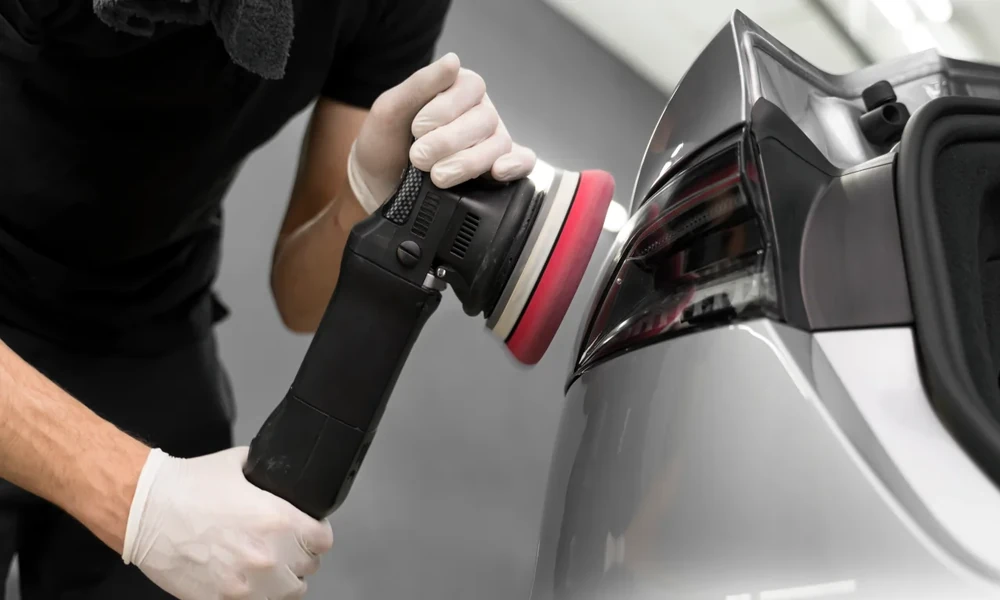
Most drivers know they’re supposed to wax their car. Far fewer know why, or how to figure out when it’s actually time to do it again. Waxing gets treated like an optional cosmetic step – something you do before a road trip or a sale, if you get around to it at all.
In reality, wax is doing quieter, more important work than shine alone, and the interval that keeps it working depends on more variables than a single “every six months” rule can capture.
What Wax Is Actually Protecting
Every car’s exterior finish is built in layers: base color coat on the bottom, then a clear coat on top that gives the paint its depth and gloss. That clear coat is also the part of the car actually exposed to the outside world, and it’s thinner than most people assume – often compared to the thickness of a sheet of paper.
Left unprotected, it takes a steady beating from UV radiation, oxidation, acid rain, road salt, bird droppings, and tree sap, all of which can dull the finish or, over enough time, degrade the coating itself.
Wax doesn’t stop any of that from happening entirely, but it adds a sacrificial barrier that takes the damage instead of the clear coat. That’s the whole logic behind reapplying it on a schedule: the wax layer wears down gradually and predictably, and once it’s gone, the paint underneath is exposed again.
So, How Often Should You Actually Wax?
There’s no single number that applies to every car, but there is a reasonable baseline. According to AAA, most vehicles should be waxed at least twice a year, with more frequent applications – closer to every three to four months – recommended for cars that sit outside and take on heavier sun or winter exposure.
J.D. Power puts the range even a bit wider, noting that the right interval really comes down to where and how the car is kept, which lines up with what most working detailers see in practice.
Think of that twice-a-year figure as a floor, not a target. A car that lives in a climate-controlled garage and only sees mild weather can often go the full six months between waxes.
A car parked on the street in a region with harsh winters, heavy road salt, or long stretches of direct sun is going to need attention closer to every quarter, sometimes sooner.
The Variables That Actually Move the Timeline
A few factors matter more than the calendar does:
- Where the car is parked. Garage-kept vehicles lose their wax layer far more slowly than anything sitting outside 24/7.
- Climate and season. Intense summer UV and winter road salt are two of the fastest ways to strip a wax layer. Cars in the Midwest and Northeast, where both extremes show up in the same year, tend to need more frequent coats than cars in milder regions.
- Driving frequency and conditions. A daily commuter accumulates more road grime, bug residue, and washing cycles than a weekend car, all of which wear down protection faster.
- Type of product used. A traditional carnauba paste wax delivers a warm, deep shine but tends to break down within a matter of weeks to a couple of months. Synthetic paint sealants last longer, often in the three-to-six-month range. Ceramic coatings sit at the far end of the spectrum, holding up for a year or more, though they come at a higher upfront cost and require more careful prep work to apply correctly.
None of these factors work in isolation – a garage-kept car with a synthetic sealant might comfortably stretch past six months, while a curbside daily driver using carnauba paste might need attention every six to eight weeks.
Reading the Signs Instead of Watching the Calendar
Rather than relying purely on a schedule, it helps to check the car itself. The simplest test happens during a wash: water that beads up tightly and rolls off the surface means the wax is still doing its job. Water that spreads out flat and clings to the paint is a sign the protective layer has thinned or worn away.
A second check is tactile. Run a clean, dry hand lightly over a washed panel. Paint that still has active protection tends to feel smooth and slick. A rough or gritty texture usually means contaminants have bonded to the surface and the wax has stopped shedding them the way it should – often a cue that the car needs a proper decontamination step, like a clay bar treatment, before fresh wax goes on.
Fading gloss is a slower, more visual signal. If the finish starts looking flat or chalky under direct light compared to how it looked right after the last detail, that’s usually the wax layer breaking down rather than a problem with the paint itself.
DIY Waxing vs. Leaving It to a Professional
Hand-applying wax isn’t complicated, but it is time-consuming if it’s done properly: washing and decontaminating the surface first, applying thin even layers, and buffing with clean microfiber towels one panel at a time. Skipping steps – waxing over dirt, or applying too thick a layer – tends to create more work later, since built-up residue has to be stripped before the next application will bond correctly.
That’s the appeal of having it done professionally on a set schedule rather than squeezing it in between other weekend chores. A full exterior detailing service typically folds surface decontamination, paint prep, and a wax or sealant application into one visit, which is usually more consistent than doing it piecemeal at home – and it saves the guesswork of judging whether the prep work was thorough enough.
Shops that specialize in this kind of work, such as Precision Detailing, which serves several communities across Ohio’s Medina County, can also help a driver figure out which type of protection – wax, sealant, or ceramic coating – actually fits their climate and how the car is used day to day, rather than guessing from a product label at the store.
Building a Routine That Actually Works
The most reliable approach isn’t chasing a fixed number of months – it’s pairing a reasonable baseline with the water-bead and feel tests every time the car gets washed.
For most drivers, that means planning on wax roughly every three to four months, checking sooner if the car sees a rough winter or a summer of long sun exposure, and adjusting the interval based on which type of product is actually on the paint.
Treated that way, waxing stops being a once-in-a-while chore and becomes part of routine upkeep – closer to changing oil than detailing for a special occasion.
The payoff isn’t just a better-looking car; it’s paint that resists fading, chipping, and corrosion for years longer than it would unprotected, which matters just as much at trade-in time as it does on the drive home from the car wash.

Comments are closed.